Responsive online store
Product catalogue with search, filters, variants, favourites, shopping cart, discount codes and gift cards.
Integrated e-commerce platform
A brand-tailored online store, management system and team tools in one integrated solution.
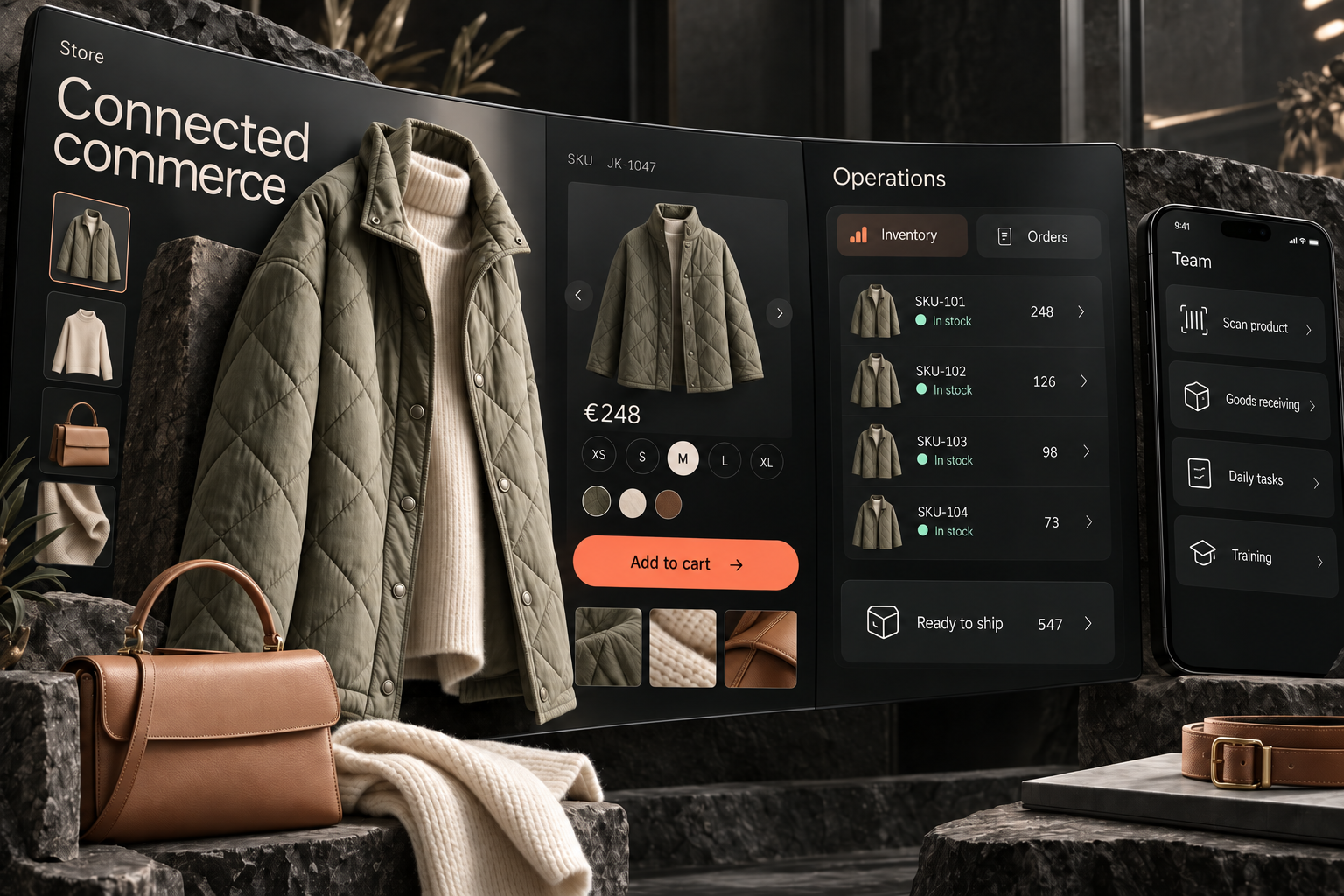
Platform overview
Platform capability visualisations with a customised interface design. Images illustrate product management, order processing and team workflows.
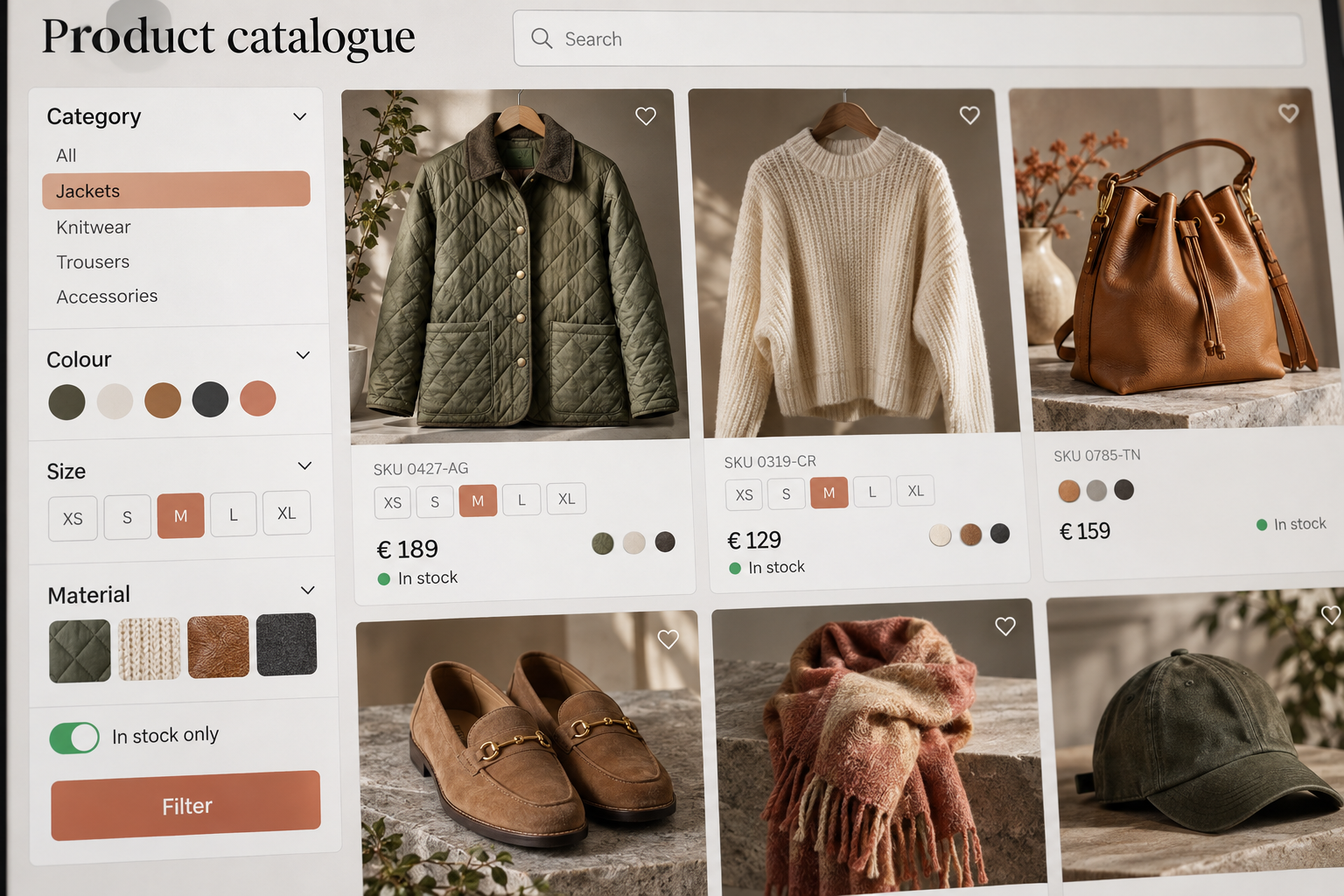

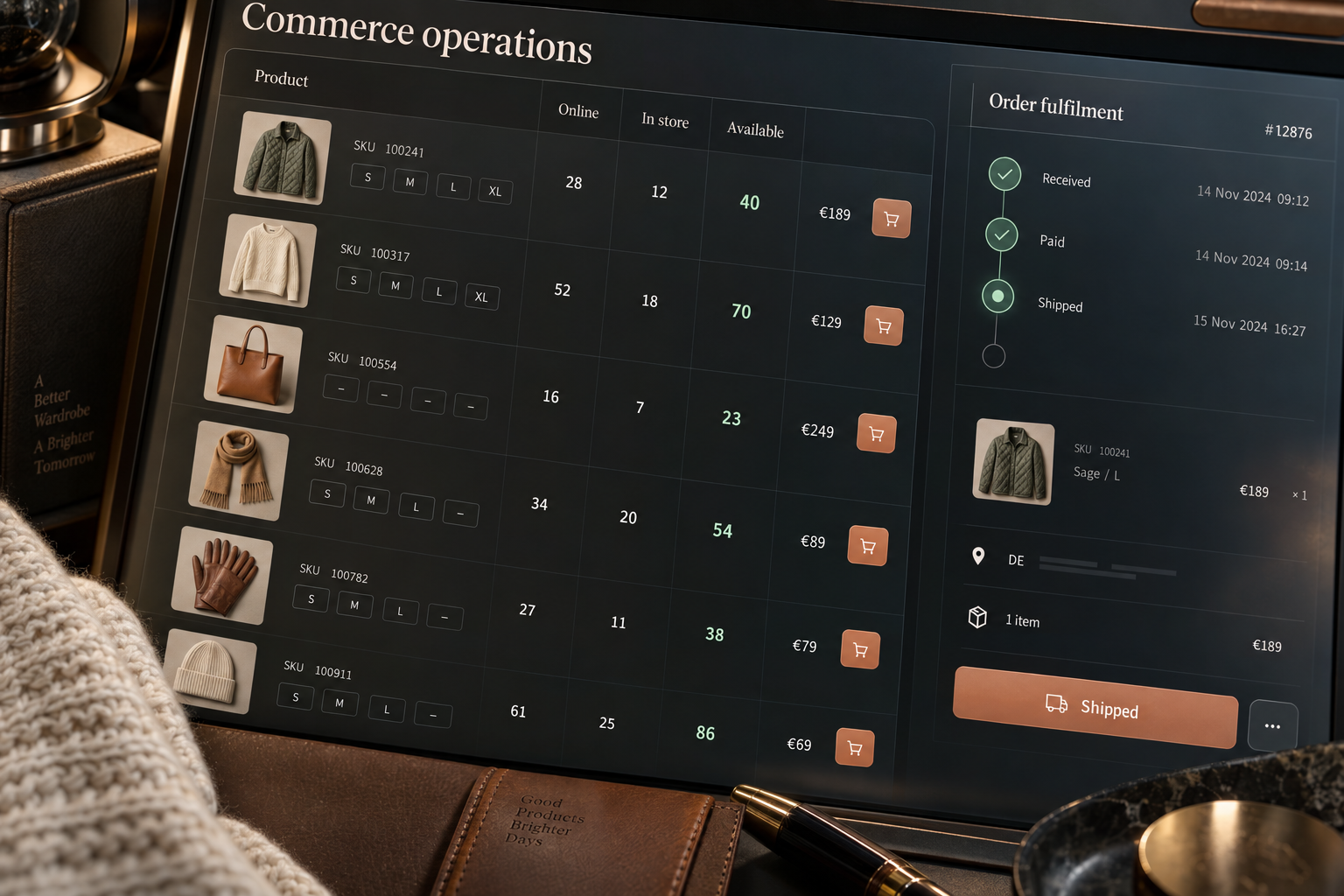
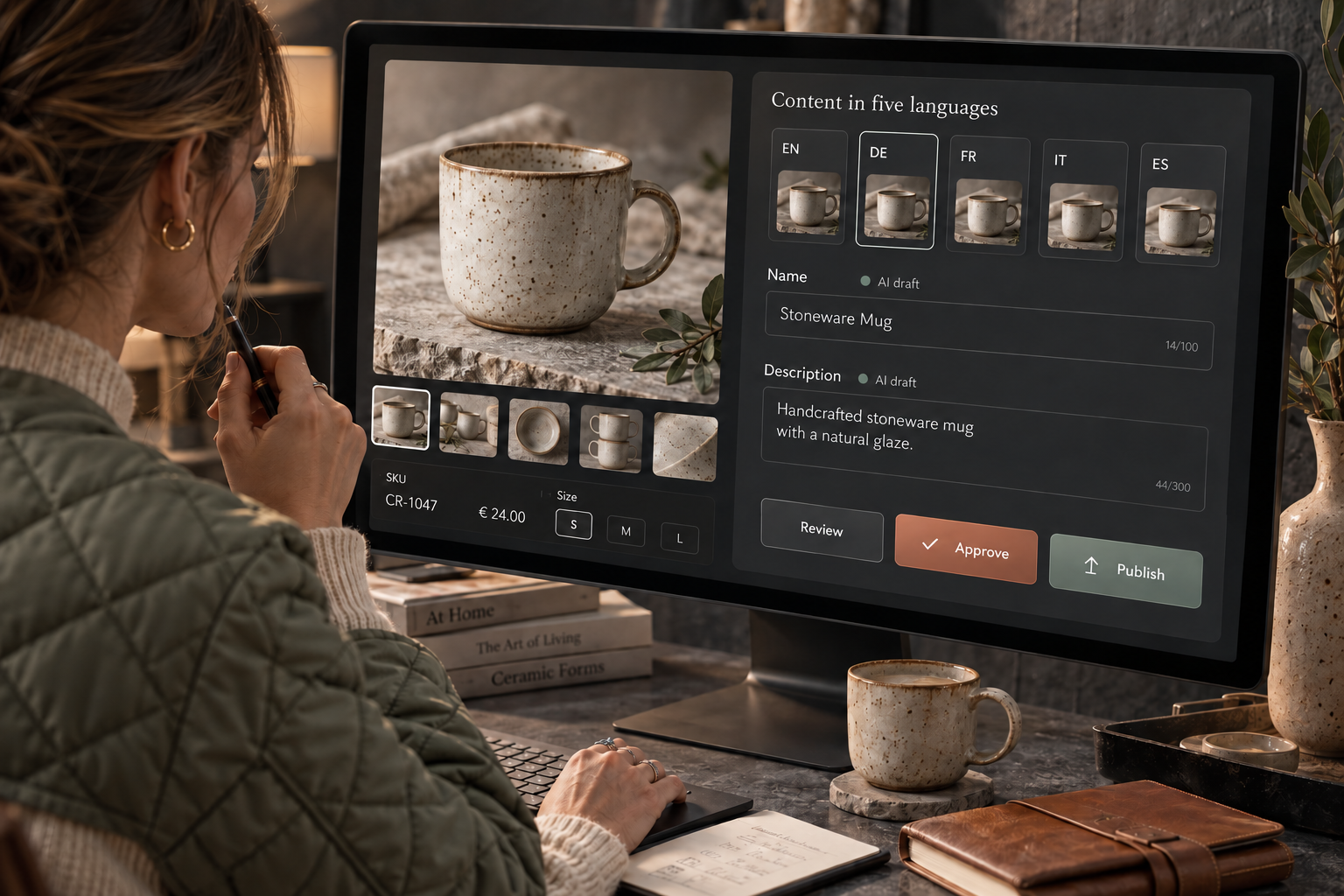
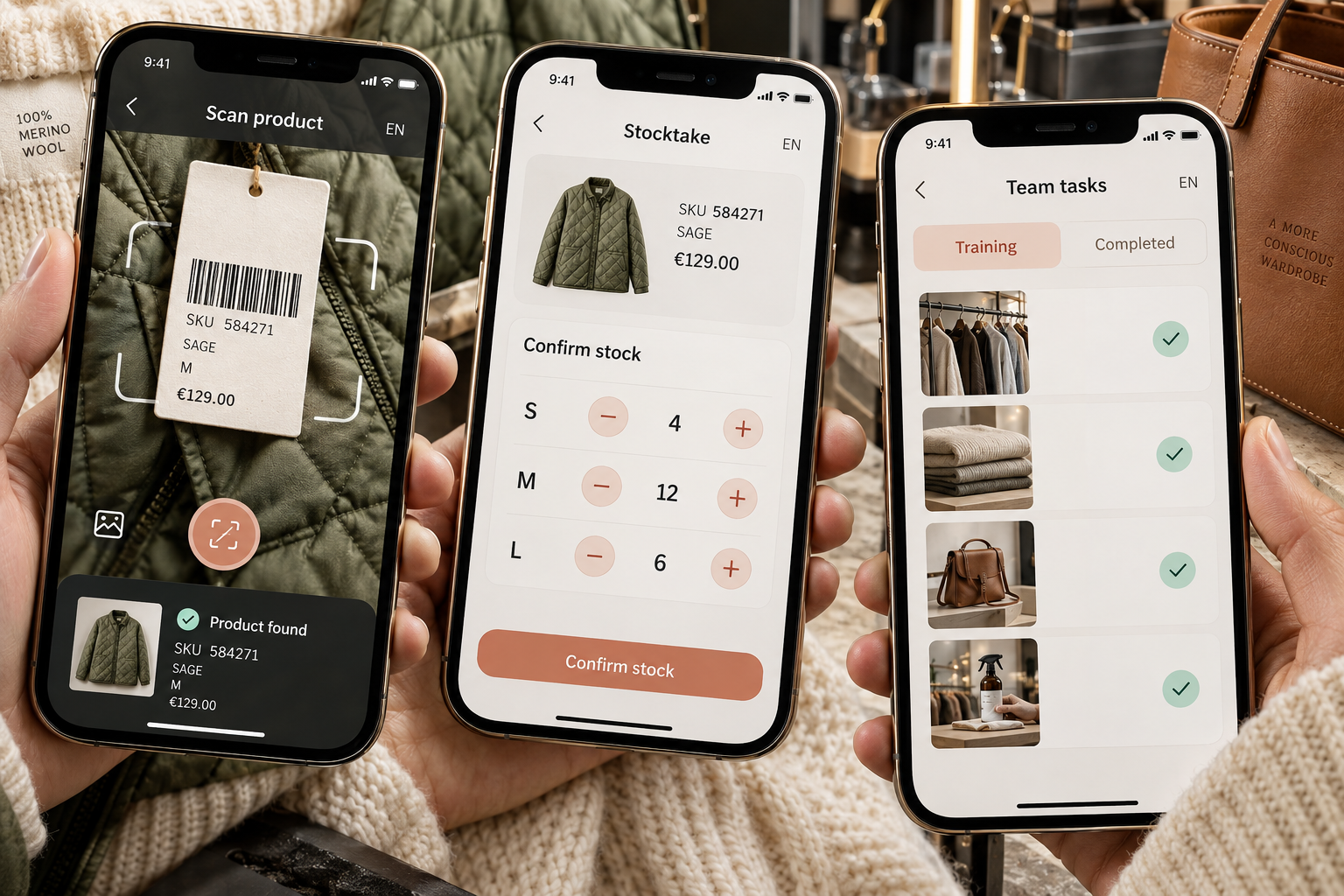
Centralised commerce management. Product catalogue, orders, inventory, customer communication and personnel workflows on one platform.
The solution combines an online store, multilingual content management and shared inventory for online and physical retail.
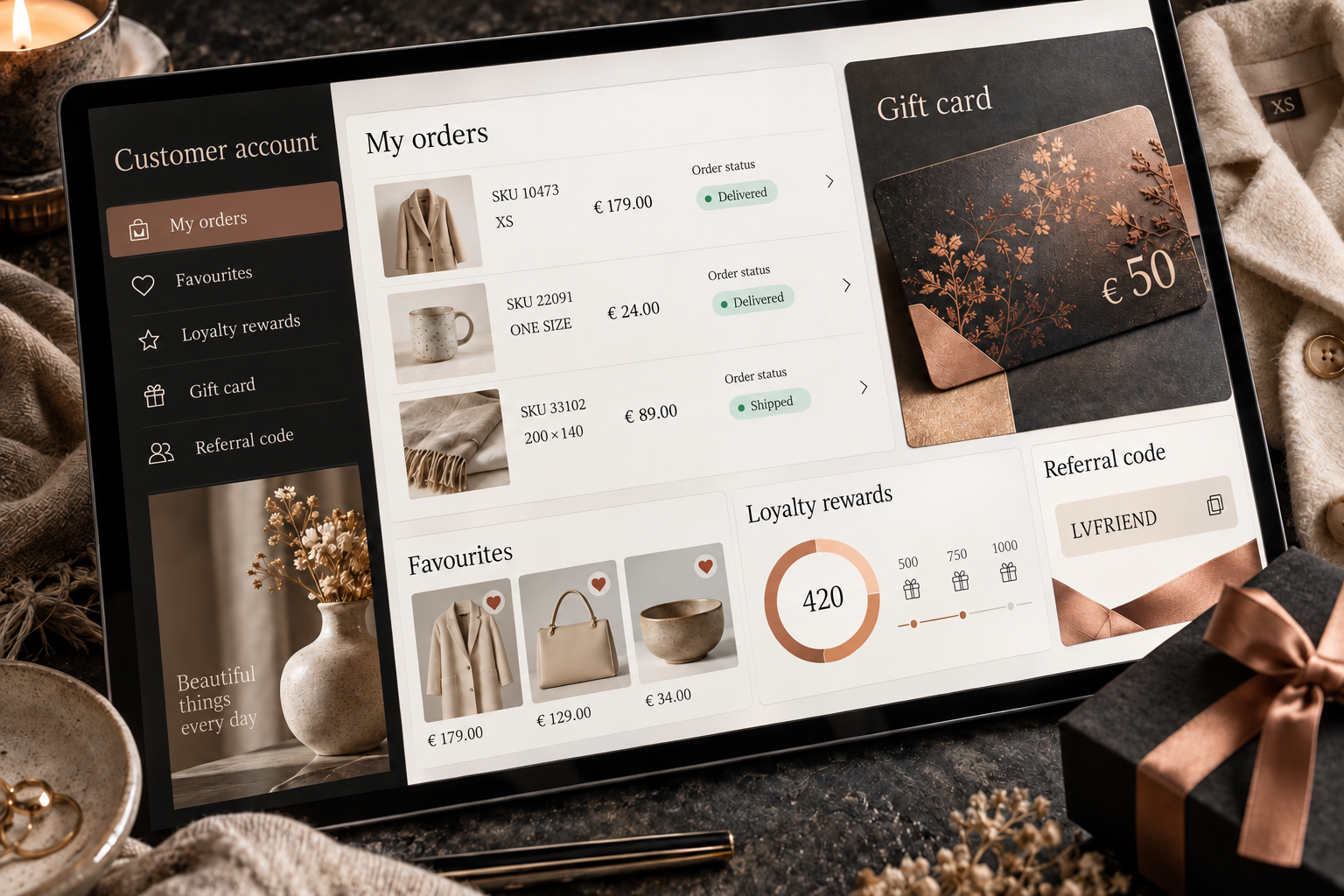
Product catalogue with search, filters, variants, favourites, shopping cart, discount codes and gift cards.
Your chosen languages are maintained in one shared content workflow. We agree the scope for your target markets.
Online orders, in-store sales, goods receiving and stocktaking use the same inventory.
Product browsing, variant selection and checkout are optimised for mobile devices and desktop computers.
Control centre
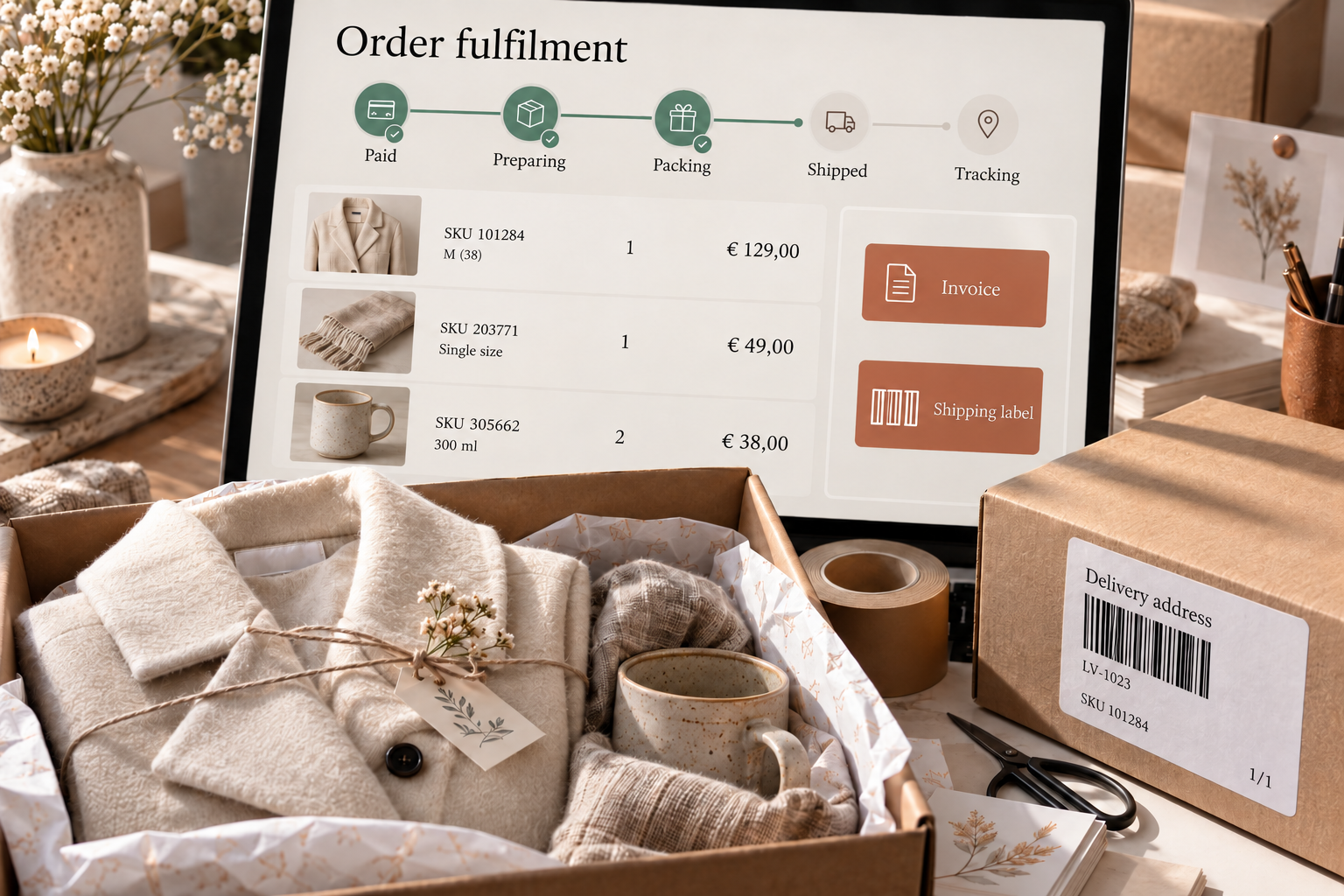
The administration workspace brings together sales metrics, fulfilment, inventory, customer data and marketing management.
AI supports content preparation and translation. Prices, inventory and order data are validated on the server against defined rules.
AI helps create product names, descriptions, SEO fields and image alternative text. Content can be generated from a description or product image.
Missing translations can be completed automatically while preserving HTML structure and localised store URLs.
Customer chat uses actual product, delivery and inventory data and hands the conversation to a person when required.
AI services support configurable fallback priorities, usage limits and function-level usage reporting.
AI-generated content can be reviewed before publication. Pricing, payments and inventory follow separate business rules.
Data exchange and mobile workflows
Mobile receiving, image submission and spreadsheet imports form one data workflow. Data sources and connections are adapted to your operations.
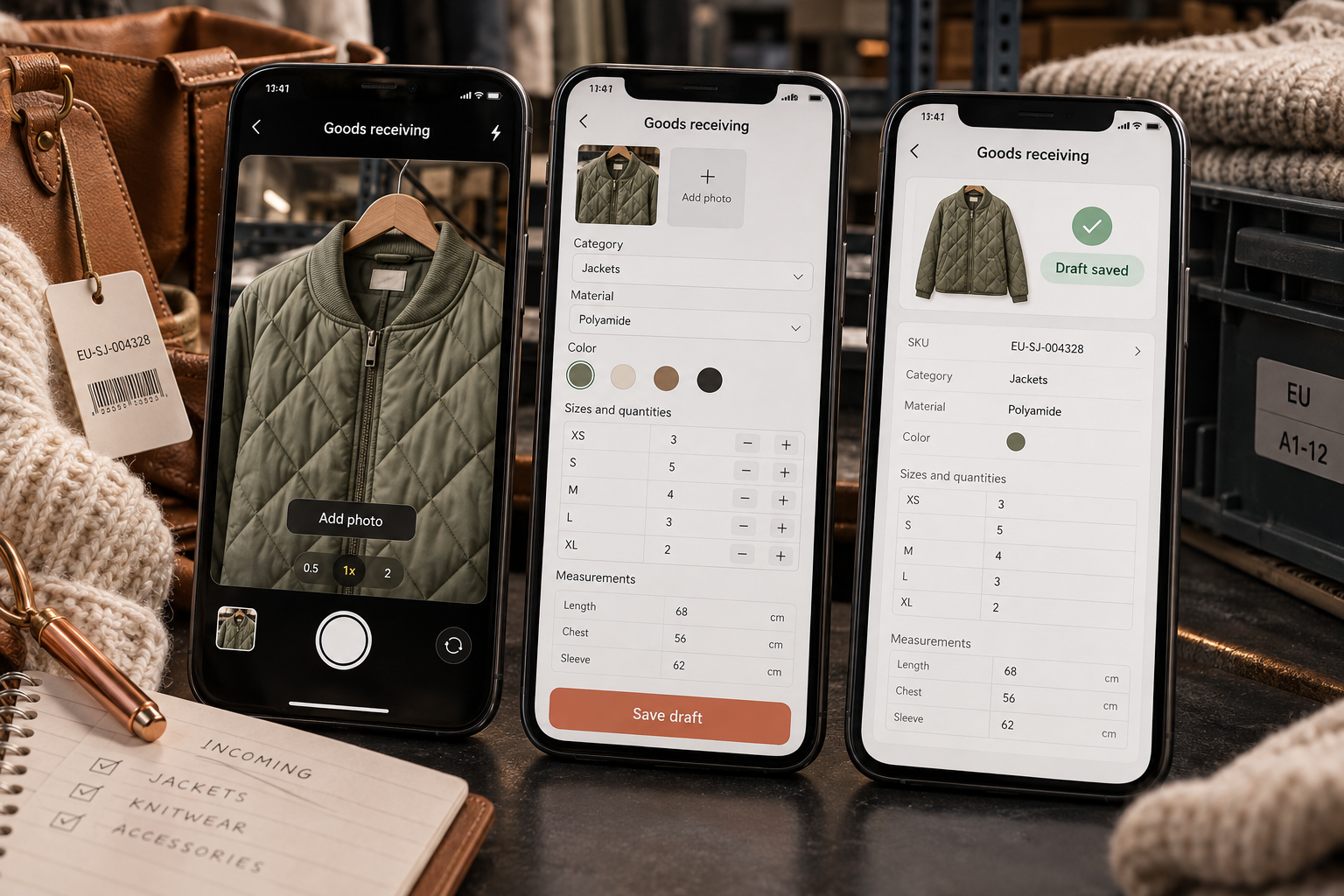
The receiving form captures an image, category, material, colour and size variants, and received quantities. Measurement fields adapt to the selected product type.

Images sent from a mobile device enter a central inbox for processing and product import. Intake channels and file storage connections are tailored to client requirements.
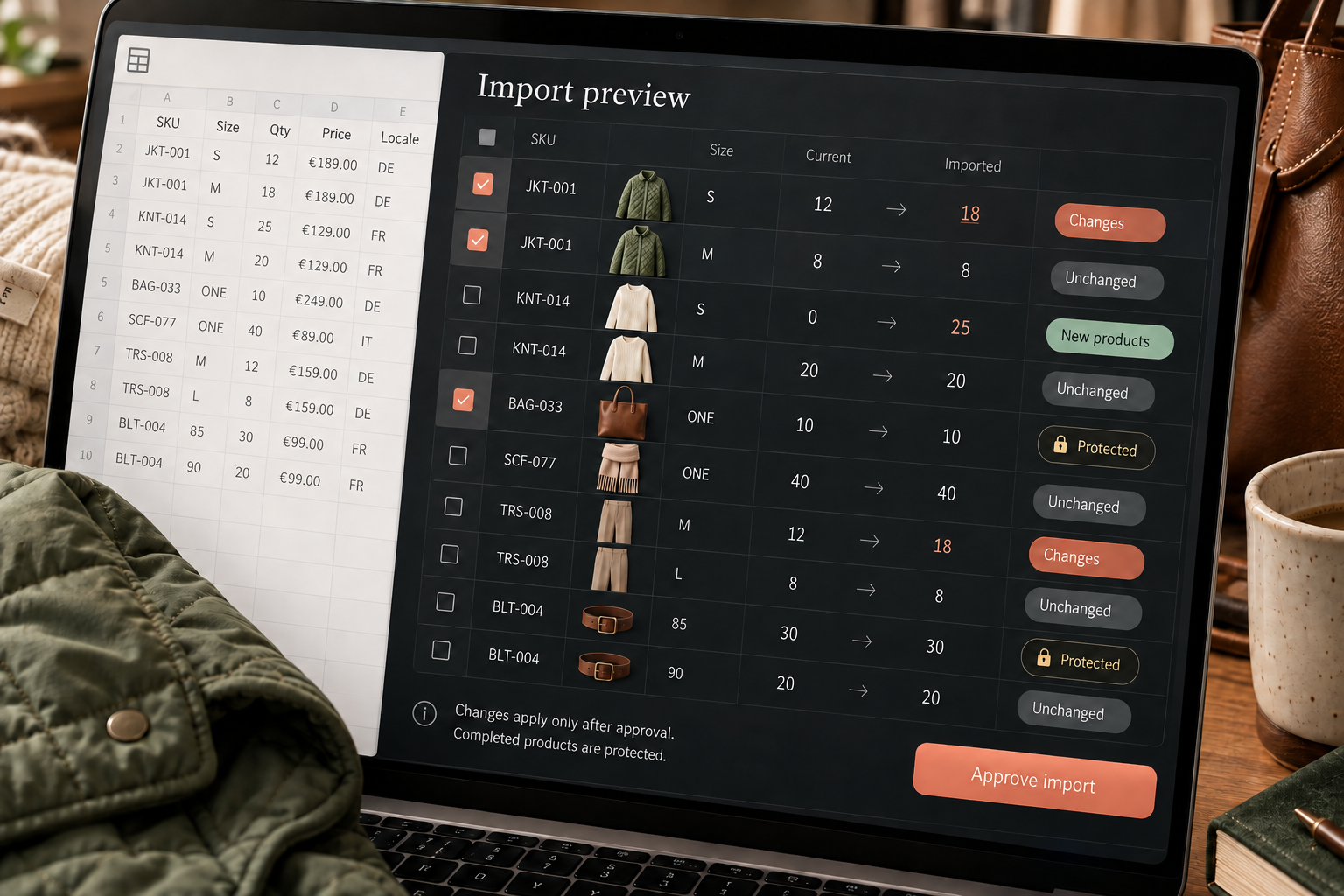
Export inventory to an editable spreadsheet. After editing, the import preview identifies new products, stock and measurement changes, errors and unchanged records. Changes are applied only after approval.
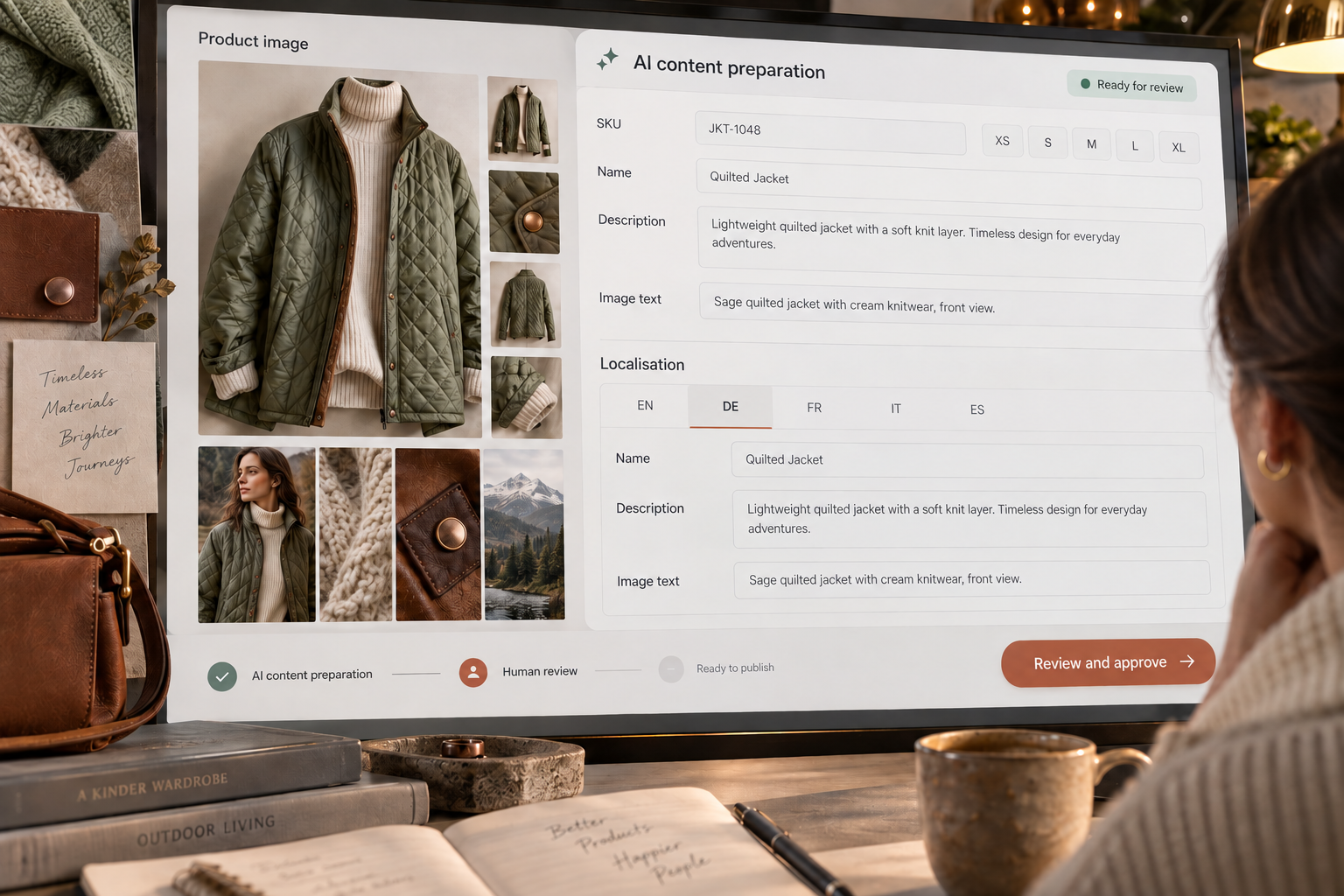
AI analyses the product image and drafts names, descriptions, SEO fields and alternative text. Checked content can be translated into the shop languages agreed for your project.
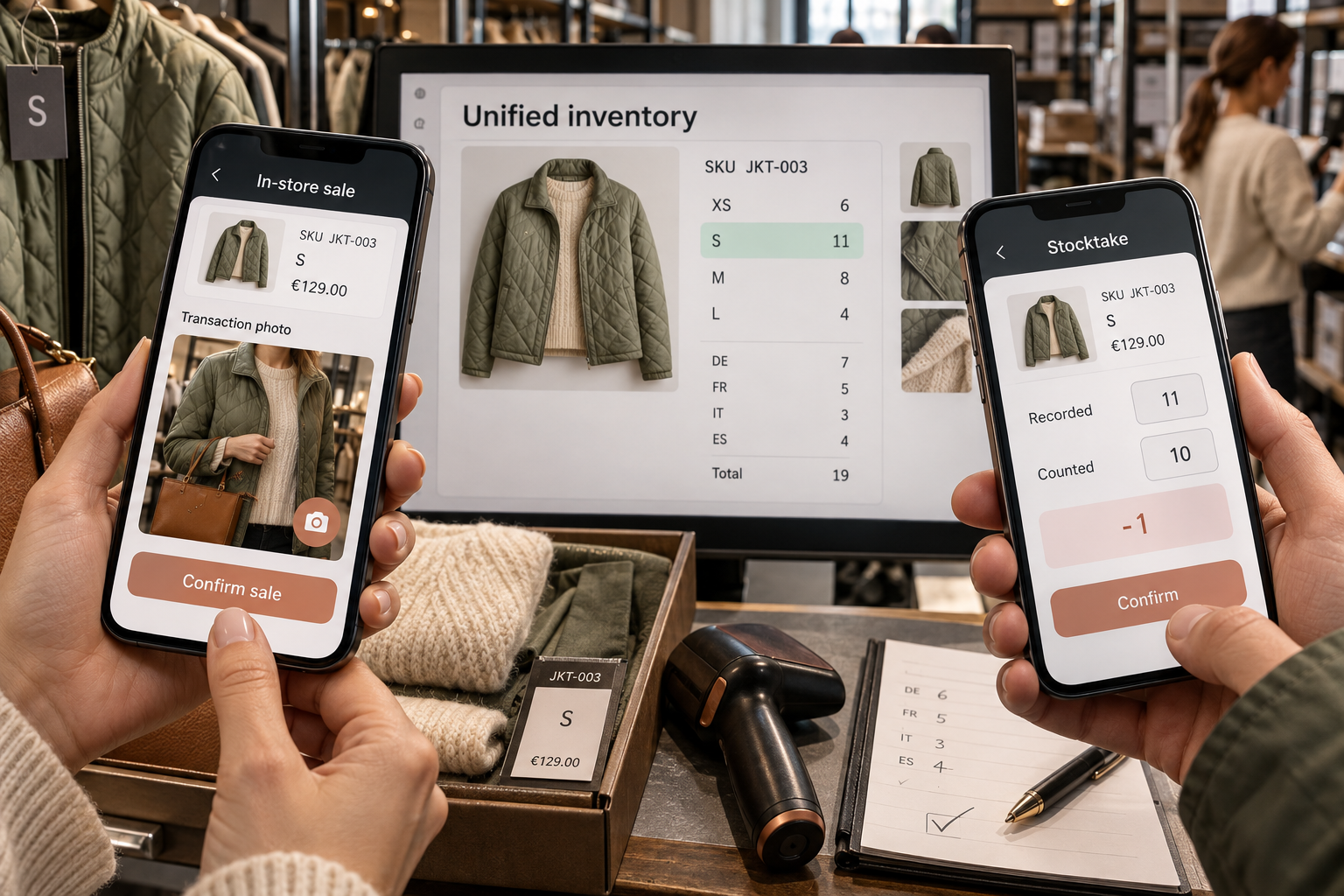
Register an in-store sale on a mobile device by selecting a product and variant and attaching the required transaction image. Approval reduces the shared SKU stock and records the transaction in the activity history.
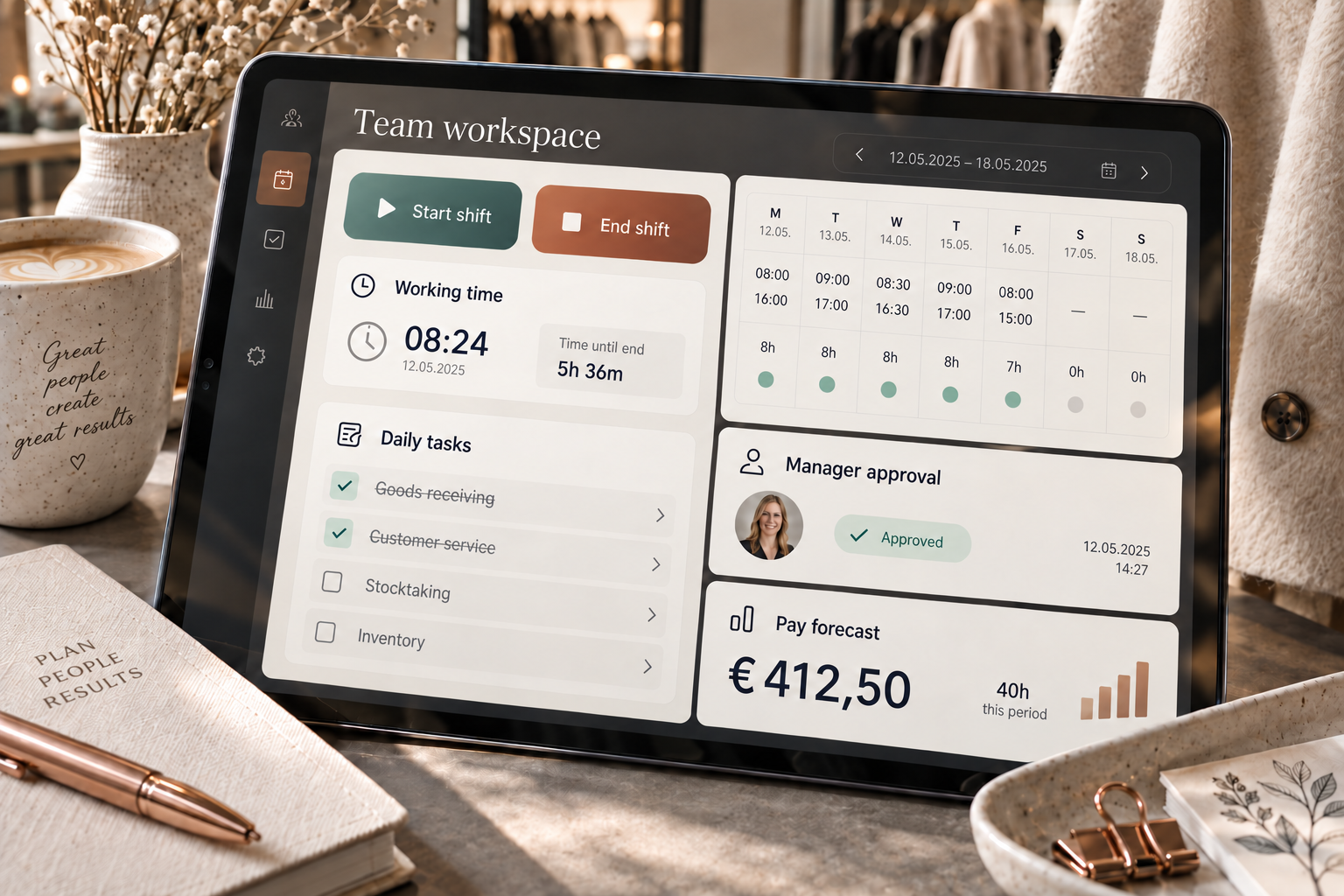
The mobile staff workspace supports goods receiving, sales, stocktaking and time tracking using shared platform data.
Marketing capabilities cover audience acquisition, automated reminders, loyalty programmes and customer communication.
SEO, product feeds, analytics, social platform pixels, campaigns and multilingual content help reach the right audience.
Current stock levels, verified-purchase reviews, variant details, size assistance and related-product recommendations.
Abandoned-cart reminders and back-in-stock notifications.
Loyalty rewards, referral codes, gift cards, post-purchase offers and review invitations.
Web chat, customer message history, mobile communication and email notifications provide consistent customer service.

10 / 15 · Feature catalogue
Capability catalogue
Detailed capability overview by platform module.
Source code, data and future management — owned by you.
Our own AmberNord modules refined and tested over years and modern AI-assisted development workflows simplify adaptation. People define the design and workflows, direct implementation, and review and test the result. Development tools are included in the agreed project price; required functions and integrations are agreed with you. After handover, the buyer owns the project, source code and business data. Operation remains independent of a single developer.
Adaptable architecture
Full access to the delivered source code allows modifications to platform features, interfaces and workflows. Customisation covers the entire solution, beyond the extension limits of a closed platform.
We develop connections to accounting, ERP, CRM, logistics, payment and other services according to available interfaces and agreed requirements.
Spreadsheet, file storage and communication connections are selected and adapted to the client's working environment. Integration scope is defined during implementation.
Analytics and advertising integrations with consent controls to measure sales performance and reach audiences.
After handover, the buyer owns the project and source code. Maintenance and development can be handled by the in-house team or a chosen development partner.
Implementation covers requirements, design adaptation, integration configuration, acceptance testing and project handover.
Product types, markets, languages, delivery regions, team roles and customer journey.
Colours, typography, logo, imagery, homepage structure, tone of voice and email design.
Domain, email, payments, delivery, analytics, social login and required data sources.
Products, variants, prices, inventory, legal content, translations and a complete test order.
Indexing, production configuration, team training and practical daily workflows.
Launch an online store with integrated product, order and customer management.
Combine online and physical retail with shared inventory and customer communication.
Operate across language markets with centralised content and product catalogue management.
Role-based access, mobile inventory workflows, task management and time tracking.
Adaptable design, custom integrations and company-owned source code for future development.
During the demonstration, we assess your requirements, required integrations and implementation scope.